
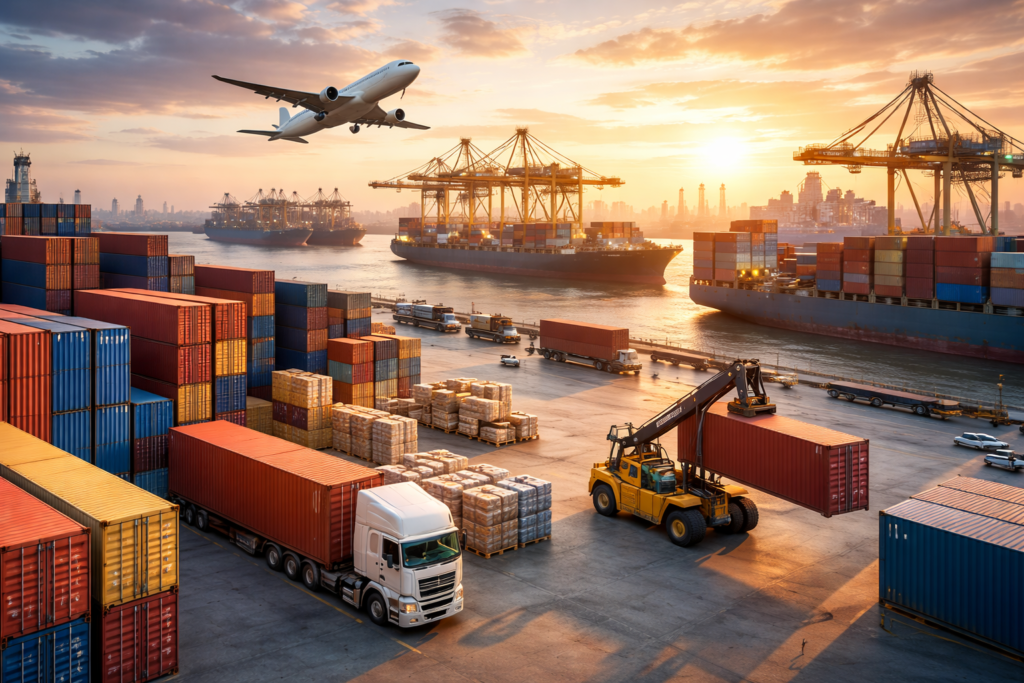
The growing complexity of global import logistics
Global import logistics has become increasingly complex as supply chains expand across multiple regions and regulatory environments. Companies sourcing products internationally must manage transportation, customs clearance, documentation, and delivery timelines with a high level of precision. Any disruption in these processes can lead to delays, increased costs, and operational inefficiencies.
Modern supply chains are no longer linear. They operate as interconnected networks where raw materials, components, and finished goods move through several countries before reaching their final destination. This complexity requires structured logistics planning and reliable partners.
Supply chain efficiency as a competitive advantage
Efficient import logistics directly impacts competitiveness. Optimized shipping routes, accurate demand forecasting, and reliable lead times allow companies to reduce inventory holding costs and respond faster to market changes. Businesses that master logistics coordination gain flexibility and resilience, even during periods of global disruption.
Technology plays a central role in this transformation. Digital tracking systems, automated documentation, and real-time communication improve visibility across the entire supply chain, enabling proactive decision-making.
Risk management in international sourcing
Import operations are exposed to multiple risks, including regulatory changes, port congestion, geopolitical tensions, and transportation disruptions. Effective logistics strategies incorporate risk mitigation through diversified sourcing, buffer inventory, and strong relationships with freight forwarders and customs brokers.
Compliance is equally critical. Accurate classification of goods, adherence to import regulations, and proper documentation reduce the likelihood of delays or penalties at borders.
The role of logistics partners in global trade
Reliable logistics partners act as extensions of a company’s operations. They provide expertise in international shipping, customs procedures, and local regulations. Strategic collaboration with experienced providers ensures smoother imports and consistent delivery performance.
These partnerships also support scalability. As import volumes grow, logistics providers help adapt transportation capacity and distribution strategies without compromising service quality.
Long-term impact on business growth
Strong global import logistics supports sustainable business growth. It enables companies to access international suppliers, control costs, and maintain consistent product availability. Over time, logistics efficiency becomes a structural advantage rather than a tactical function.
Organizations that invest in logistics optimization position themselves for long-term success in increasingly competitive global markets.
Source: World Economic Forum